



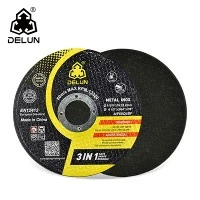
Hey there, folks! As a supplier of Thin Cutting Discs, I've seen firsthand how the diameter of a disc can have a huge impact on cutting performance. In this blog, I'm gonna break down the key factors and share some insights that'll help you make the right choice for your cutting needs.
Understanding the Basics of Disc Diameter
First things first, let's talk about what the diameter of a cutting disc actually means. Simply put, it's the measurement across the widest part of the disc. This might seem like a basic concept, but it plays a crucial role in how well the disc performs.
You see, different diameters are designed for different applications. Smaller discs, like those around 4 inches (107mm), are great for precision work and tight spaces. They're more maneuverable and can get into those hard - to - reach areas. On the other hand, larger discs, such as 14 inches, are built for heavy - duty cutting jobs where you need to cut through thick materials quickly.


Impact on Cutting Speed
One of the most significant ways the disc diameter affects cutting performance is through cutting speed. Larger diameter discs generally spin at a higher linear speed at the outer edge compared to smaller ones, even when the rotational speed (RPM) is the same. This higher linear speed allows them to cut through materials faster.
For example, if you're working on a large - scale project where you need to cut through thick stainless steel pipes, a 14 inch Cut Off Wheel for Stainless Steel can be a real game - changer. Its large diameter means it can cover more surface area with each pass, reducing the overall cutting time.
However, it's not always about going for the biggest disc. Smaller discs can also offer good cutting speeds in their own right. A Cut Off Wheel for 4 Inch Grinder 107mm might not cut as wide a swath as a 14 - inch disc, but it can be very efficient for small, detailed cuts. The key is to match the disc diameter to the job at hand.
Precision and Control
When it comes to precision and control, smaller diameter discs have the upper hand. Their size makes them easier to handle and guide, which is essential for tasks that require accurate cuts. If you're working on a project where you need to make intricate cuts in a thin piece of metal, a Cutting Wheel Metal Stainless Steel with a smaller diameter will give you better control.
You can make precise cuts along curves or around small objects without worrying about the disc wandering off course. In contrast, larger discs are more difficult to control precisely, especially when making detailed cuts. They're better suited for straight, long cuts where you don't need to be as precise.
Material Compatibility
The disc diameter also affects how well the disc works with different materials. Thicker materials often require larger diameter discs to cut through them effectively. The larger disc can generate more force and heat, which is necessary to break through tough materials like thick steel or concrete.
For thinner materials, smaller discs are usually the better choice. They produce less heat and force, which helps prevent damage to the material. If you use a large disc on a thin piece of metal, you might end up warping or melting the material due to the excessive heat and force.
Durability and Wear
Another aspect to consider is the durability and wear of the cutting disc. Larger diameter discs generally have more material, which means they can withstand more wear and tear. They can be used for longer periods before they need to be replaced.
However, this doesn't mean that smaller discs are less durable. In fact, for light - duty applications, a well - made small disc can last a long time. The key is to choose a high - quality disc that's designed for the specific material and cutting conditions.
Cost - Efficiency
Cost - efficiency is an important factor for any business or DIYer. Larger diameter discs are usually more expensive upfront, but they can be more cost - effective in the long run for heavy - duty jobs. Since they can cut through materials faster and last longer, you'll end up using fewer discs over time.
Smaller discs are more affordable initially, but if you're using them for heavy - duty work, you might find yourself replacing them more frequently, which can add up in cost. So, it's important to consider the overall cost of the project when choosing the disc diameter.
Choosing the Right Disc Diameter for Your Project
Now that we've covered the impact of disc diameter on cutting performance, how do you choose the right one for your project? Here are some tips:
- Assess the Material: Determine the type and thickness of the material you'll be cutting. Thicker materials usually require larger discs, while thinner materials can be cut with smaller ones.
- Consider the Cutting Task: Think about the type of cuts you need to make. If you need precision, go for a smaller disc. For large - scale, straight cuts, a larger disc is a better option.
- Evaluate Your Equipment: Make sure the disc diameter is compatible with your cutting equipment. Different grinders and saws have specific requirements for disc size.
Conclusion
In conclusion, the diameter of a cutting disc has a significant impact on cutting performance. Whether it's cutting speed, precision, material compatibility, durability, or cost - efficiency, each aspect is affected by the disc's size. As a Thin Cutting Discs supplier, I've seen how choosing the right disc diameter can make a huge difference in the outcome of a project.
If you're in the market for cutting discs and need some advice on which diameter is best for your needs, don't hesitate to reach out. We're here to help you find the perfect solution for your cutting tasks. Contact us to start a discussion about your requirements and let's work together to get the job done right.
References
- Smith, J. (2020). "Cutting Tools: A Comprehensive Guide". Industrial Tools Publishing.
- Johnson, M. (2019). "The Science of Cutting Discs". Tool Technology Journal.