




Grinding is a fundamental process in the manufacturing and metalworking industries, playing a pivotal role in shaping, finishing, and refining various materials. As an abrasive grinding supplier, I've witnessed firsthand the evolution of grinding techniques and the diverse range of abrasive products available in the market. Two primary categories of grinding methods stand out: conventional grinding and super-abrasive grinding. Each has its unique characteristics, advantages, and applications, and understanding these differences is crucial for businesses looking to optimize their grinding processes.
Conventional Grinding
Conventional grinding utilizes abrasives such as aluminum oxide, silicon carbide, and zirconia alumina. These abrasives have been the workhorse of the grinding industry for decades and are widely available in various forms, including grinding wheels, belts, and discs.
One of the key advantages of conventional grinding is its cost-effectiveness. Aluminum oxide and silicon carbide abrasives are relatively inexpensive to produce, making them a popular choice for high-volume manufacturing applications where cost is a significant factor. For example, if you are working on a large - scale project that requires a substantial amount of material removal, conventional grinding wheels can offer a more budget - friendly solution.
Conventional abrasives are also versatile. They can be used to grind a wide variety of materials, from ferrous metals like steel to non- ferrous metals such as aluminum and copper, as well as some non-metallic materials like wood and plastics. This versatility makes them suitable for different stages of the manufacturing process, from rough shaping to fine finishing.
However, conventional grinding does have its limitations. The cutting efficiency of conventional abrasives decreases over time as the abrasive grains dull. This leads to increased grinding forces, which can cause excessive heat generation. High temperatures during grinding can result in thermal damage to the workpiece, such as phase changes, residual stresses, and surface burn. Moreover, the wear rate of conventional abrasives is relatively high, meaning that grinding wheels and discs need to be replaced more frequently, which can disrupt the production process and increase operational costs.
Super-Abrasive Grinding
Super-abrasive grinding, on the other hand, uses two main types of abrasives: cubic boron nitride (CBN) and diamond. These abrasives are characterized by their extreme hardness and superior cutting performance.
CBN is particularly effective for grinding ferrous metals, such as hardened steels, tool steels, and nickel-based alloys. Its high thermal stability allows it to maintain its cutting ability even at high temperatures, reducing the risk of thermal damage to the workpiece. CBN abrasives can achieve very high material removal rates while maintaining excellent surface finish quality. This makes them ideal for applications in the automotive, aerospace, and tool-making industries, where precision and high-quality finishing are essential.


Diamond abrasives are the hardest known materials and are extremely effective for grinding non-ferrous metals, ceramics, glass, and composites. Diamond grinding wheels and discs can provide a high-precision finish on these hard-to-grind materials. They have a long service life compared to conventional abrasives, as the wear rate of diamond is much lower. This means fewer wheel changes, less downtime, and increased productivity.
Despite these advantages, super-abrasive grinding is generally more expensive than conventional grinding. The high cost of CBN and diamond abrasives is a significant deterrent for some businesses, especially those with tight budgets. Additionally, the equipment required for super-abrasive grinding may be more specialized and expensive, further adding to the initial investment.
Application-Specific Considerations
When choosing between conventional and super-abrasive grinding, it is essential to consider the specific requirements of the application. For general-purpose grinding tasks, such as deburring or rough shaping of common metals, conventional abrasives are often the most practical choice. They offer a good balance between cost and performance for these types of applications.
For high-precision applications, such as grinding the surfaces of precision gears or the cutting edges of cutting tools, super - abrasive grinding is usually the better option. The superior hardness and cutting performance of CBN and diamond can ensure the required dimensional accuracy and surface finish.
In the automotive industry, conventional grinding is commonly used for mass-producing engine components during the initial machining stages, while super-abrasive grinding may be employed for the final finishing operations to achieve the tight tolerances necessary for optimal engine performance.
Our Product Range
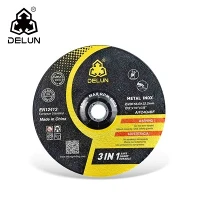
As an abrasive grinding supplier, we offer a wide range of products to suit both conventional and super-abrasive grinding applications. Our DELUN 9 INCH GRINDING DISC WITH EFFICIENT PERFORMANCE is a popular choice for conventional grinding tasks, providing high material removal rates and long-lasting performance.
If you are working on metal INOX processing, our 100mm Best Grinding Disc For Metal INOX Processing is designed to offer efficient and precise grinding. It combines the performance of conventional abrasives to meet the specific needs of INOX machining.
For more lightweight and handheld grinding applications, our 4.5 Inch Grinding Disc Metal Grinding Metal Processing Durable is a reliable option. It is built to be durable and can handle various metal grinding tasks with ease.
We also have super - abrasive products, such as our Grinding Disc Metal Grinding INOX Grinding At 5 Inch Super Durability. This disc is perfect for applications where high - precision and long-lasting performance are required, offering the benefits of super-abrasive technology at an affordable price.
Conclusion and Call to Action
In conclusion, the choice between conventional and super - abrasive grinding depends on a variety of factors, including the material being ground, the required precision, the production volume, and the budget. Both methods have their place in the manufacturing industry, and understanding their differences can help businesses make informed decisions about their grinding processes.
If you are looking for high-quality abrasive grinding products, whether for conventional or super - abrasive grinding, we are here to help. Our team of experts can provide you with detailed advice on the best products for your specific needs. We invite you to contact us to discuss your requirements and start a procurement discussion. We are committed to delivering the best solutions to enhance your grinding operations and improve your productivity.
References
- Trent, E. M., & Wright, P. K. (2000). Metal Cutting. Butterworth - Heinemann.
- Stephenson, D., & Agapiou, J. S. (2006). Manufacturing Processes and Materials for Engineering Technologists. Prentice Hall.
- Rowe, W. B. (2009). Principles of Modern Grinding Technology. Elsevier.