


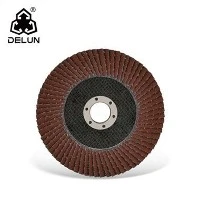

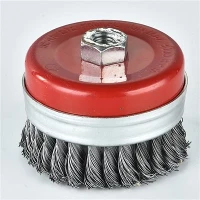

Hey there, if you've ever worked with grinding tools-whether you're a metal fabricator, a DIY enthusiast, or someone who runs a busy workshop-you've probably stared at that round metal ring clamped around your grinder wheel and thought, "What even is that thing?" I'm gonna break it down for you, 'cause way too many folks overlook the grinder wheel flange until something goes wrong. Let's cut through the jargon and get real about why this tiny (but super important) part matters.


First off, let's keep this relatable. I'm a grinder wheel supplier, so I see first-hand how people skip over the flange and end up dealing with wheel wobble, premature wear, or even worse-safety scares. Yeah, the grinding disc itself is the star (you know, the abrasive part that does the cutting), but the flange? That's the unsung hero holding it all together. Let's start with the basic function, no tech textbook gobbledygook.
The main job of a grinder wheel flange is to secure the grinding wheel to your grinder's spindle-like how a seatbelt keeps you in the car, but way more critical for a tool spinning at thousands of RPM. Wait, RPM is revolutions per minute, right? Most angle grinders run between 8,000 and 12,000 RPM, so even a tiny misalignment here can turn a smooth grind into a shaky, dangerous mess. But it's not just "holding on" - it also distributes that clamping force evenly. If you ever tighten the nut too much without a flange, you're basically squeezing the abrasive wheel unevenly, which can crack it or make it warp mid-use. No one wants a grinding wheel shattering at full speed-trust me, I've seen the aftermath, and it's not pretty.
Now, let's get into the science a little, 'cause there's method to the madness here. Grinder wheels are brittle by design-they're made of abrasive grains bonded together with resin, ceramic, or rubber. They can't handle concentrated pressure, so the flange spreads the clamping load across the entire face of the wheel's center hole. That's why flanges have a specific diameter-usually half the size of the grinding wheel itself, give or take. For example, if you're using a 4.5-inch disc, the matching flange is around 2.25 inches; same for a 5-inch disc, the flange is about 2.5 inches. Mess up that size, and you're asking for trouble.
I get it-some people think "a flange's a flange, right?" Nope. Not all flanges are created equal, especially when you're working on metal or INOX (that's stainless steel, for the newbies). Let's talk about how flange design ties to performance. If you're grinding INOX, you need a flange that keeps the disc stable enough to avoid "chatter" - those annoying ripples that ruin your finish. I've had a lot of customers switch to the right flange and suddenly their 100mm Best Grinding Disc For Metal INOX Processing (hey, that's one of our products) goes from rough to smooth, no extra effort. The flange's flatness matters too-even a tiny bend can throw the whole wheel off, so I always tell folks to check their flanges for dents or warping before slapping a new disc on.
Wait, let's circle back to safety, 'cause that's non-negotiable here. OSHA (you know, the workplace safety folks) has strict rules about grinder wheel flanges-mandating that both the top and bottom flanges be the same diameter, and that clamping pressure is uniform. If you're running a workshop, ignoring that isn't just a fine risk-it's risking lives. I once had a customer who tightened the nut so hard with a wrench that the bottom flange dug into the disc, causing it to crack mid-grind. He caught it before it blew, but that's a close call no one wants. The flange isn't just a part to check off the list; it's a key safety component.
Now, let's talk about matching flanges to your grinder wheel. It's not one-size-fits-all, which is why I work with customers to get this right. For 4.5-inch metal grinding discs-like our 4.5 Inch Grinding Disc Metal Grinding Metal Processing Durable-you need a flange that fits the spindle of your grinder (usually 3/8-inch or 5/8-11 thread, for angle grinders). Using the wrong flange size for a 5-inch disc? That's when you get wobble, which makes the disc wear out faster than it should and can even cause it to break apart. Same with a 9-inch disc-our DELUN 9 INCH GRINDING DISC WITH EFFICIENT PERFORMANCE works best with a specific flange that handles the extra torque of a larger wheel. If you skip the right flange here, you're wasting money on discs that don't last as long and risking injury.
Another thing: flanges aren't just metal. Some specialty flanges have rubber or padding on the surface that cushions the grinding wheel. That's especially helpful with softer discs or when grinding materials that need a gentler touch, like INOX. The padding also helps distribute pressure even better, which reduces wheel stress. I've found that customers using these padded flanges get 20-30% more life out of their grinding discs-small upgrade, big payoff.
Let's debunk a common myth here: some folks think "I can use a washer as a flange." No, just no. Washers are thin, flat, and not designed to spread clamping force over a large area. A grinder wheel flange has a specific profile-slightly raised in the center to fit the spindle, and a wider flat edge to cover most of the wheel's center. A washer can't do that, so you end up with concentrated pressure that cracks the wheel. I've seen guys try this to save a buck, and they end up buying a new disc every day instead of every few weeks. Not worth it.
Now, what happens when your flange is worn out? Scratches, dents, or rust on the flange surface can create uneven pressure on the grinding wheel. That leads to wobble, which causes the disc to grind at an angle, wearing down one side faster. You might also notice sparks flying in weird directions, which is a sign of misalignment. If you see any of that, stop, check your flange, and replace it if it's damaged. It's way cheaper than replacing a broken grinding wheel or, worse, getting hurt.
As a grinder wheel supplier, I talk to people every day who underestimate how important the flange is. They focus on the disc's abrasive quality, its RPM rating, or whether it works for INOX, but the flange is the backbone that makes all that stuff work. Even the best grinding disc-like our Grinding Disc Metal Grinding INOX Grinding At 5 Inch Super Durable-won't perform right if the flange is wrong or worn out.
Let's wrap this up with some quick takeaways, 'cause I know you're probably busy. First, always use matching flanges for your grinding wheel (same diameter, same thread for the spindle). Second, inspect your flanges before every use-no dents, warps, or rust. Third, don't skip the flange, and don't use a washer instead. Fourth, if you're working with metal or INOX, a good flange will keep your grind smooth, safe, and your discs lasting longer.
If you're looking to upgrade your flanges or need help matching them to our grinding discs-whether it's the 100mm INOX disc, 5-inch metal disc, 4.5-inch workhorse, or 9-inch high-performance one-reach out. I'm here to make sure you've got the right parts to keep your grinder running smooth and safe. No confusing jargon, just straight-up advice from someone who's been in this business for years.
Reference:
- Occupational Safety and Health Administration. (n.d.). Power Tool Safety - Grinders. U.S. Department of Labor.
- Grinding Wheel Manufacturers Association. (2022). Best Practices for Grinder Wheel Installation and Maintenance.
- Industrial Tooling Digest. (2023). The Critical Role of Flanges in Abrasive Tool Performance.