




If you've ever stared at a caked-on cast iron pan, a grimy griddle, or the rusted edge of a kitchen utensil and thought, "Is my go-to cleaning tool even working?" you're not alone. I run a small business making twisted cup brushes (yeah, I'm the supplier behind a lot of the ones you might see at hardware or specialty kitchen supply spots) and get this question all the time: Can a twisted cup brush actually be used for cleaning kitchen utensils? Spoiler: The short answer is yes-if you use the right kind. But there's a lot more to it than just grabbing any wire brush off a shelf and scrubbing your favorite spatula into oblivion. Let's break this down, no fancy industry jargon, just real talk from someone who's been messing with twisted wire tools for years.
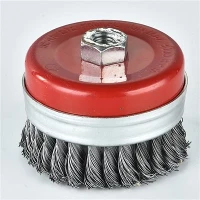
First, let's get on the same page about what a twisted cup brush actually is, because not everyone knows the difference between this and your basic wire brush. A twisted cup brush has thin wires that are twisted tightly together in little bundles, crimped at the base and shaped into a cup-like form-hence the name. That twist is what makes it different from other wire brushes, right? The twisted bundles are sturdier than straight wires, they flex a little bit instead of snapping immediately, and they pack a way tighter clean. Most people associate these with heavy-duty jobs: grinding metal, removing rust from outdoor railings, scrubbing rust off garden tools. But kitchen utensils? That's a whole different set of rules. You can't just drag a rust-removing cup brush over a non-stick pan and expect it to stay intact. That's a recipe for scratching up your cookware and ruining a $20 skillet you love.
So when is a twisted cup brush actually useful for kitchen stuff? Let's start with the utensils that can handle some serious scrubbing. Cast iron skillets are the big one here. If you've ever tried to clean cast iron with a regular sponge or even steel wool, you know that baked-on grease, burnt bits, and that hard-to-remove patina build-up can be a nightmare. Steel wool works, but it leaves tiny metal shavings that you have to pick out one by one. A twisted cup brush? Done right, it's way better. The twisted wires are tough enough to get through that caked-on gunk without leaving shavings, and since cast iron is designed to hold seasoning (and it's basically indestructible if you take care of it), scratching it a little? No big deal. Wait, but hold on-you can't use a random outdoor twisted cup brush here. You need one made with food-grade materials, right? A lot of cheaper twisted cup brushes use low-carbon steel that can rust if you don't dry it perfectly, and rust in your cast iron is a pain. That's why my team makes stainless steel twisted cup brushes specifically for jobs like this. Check out our DELUN 4 Inch Stainless Steel Twisted Cup Wire Brush Super Quality for cast iron pans and heavy metal kitchen tools-we made this one with 0.2mm stainless steel wires that flex just enough to get into crevices without scratching the cast iron's seasoned surface. I've used this exact brush on my own 20-year-old cast iron skillet, and it takes off burnt bacon grease like nothing, no scratches.
Another big kitchen tool that works great with a twisted cup brush is a griddle. Whether it's a flat-top griddle on your stove or a heavy-duty outdoor one, those get super baked-on food, grease, and even charred bits from burgers or breakfast foods. A twisted cup brush cuts through that way faster than a scraper or sponge, and since griddles are usually made of cast iron or carbon steel, they can handle the pressure. Just make sure you use it when the griddle is cool-if you scrub a hot griddle with a metal brush, you can warp the metal or leave hot spots that mess up cooking later. I learned that the hard way when I scrubbed a hot griddle a few years back and ended up with a lumpy mess that had to be replaced. Oops. So rule #1 for kitchen use: always let the metal tool cool completely before using a twisted cup brush.
Now, let's talk about what you should NOT use a twisted cup brush for, because that's where most people mess up. Non-stick cookware-like Teflon pans, ceramic pans, even those hard-anodized ones that say "scratch-resistant." Any kind of twisted wire is going to scratch non-stick surfaces, and once that coating is scratched, it can leach chemicals (even if it's the "safe" kind) and the pan becomes useless. Same goes for wooden utensils-spatulas, spoons, rolling pins. The twisted wires will gouge into the wood and leave tiny grooves that trap food and bacteria, not to mention ruin the utensil's shape. Glassware, too-don't use a twisted cup brush on your fancy mixing bowls or glass cutting boards, it will scratch the glass and make it look dull.
There's also a middle ground here: polishing stainless steel utensils. If you have a set of stainless steel forks, spoons, or kitchen knives that have dulled from use, or have light tarnish on them, a high-performance twisted cup brush is perfect for polishing them back to shine. Not the heavy-duty grinding kind, though-something softer. Our DELUN 3 Inch Twisted Cup Brush For Polishing In High Performance is made with thinner, more flexible wires than the 4-inch grinding one, so it buffs away tarnish on stainless steel without scratching the surface. I used this last month on a set of stainless steel serving utensils that had sat in a drawer for years and looked dull, and they looked brand new in five minutes. Way faster than polishing by hand, and way less elbow grease.
Wait, but what about cleaning metal utensils that have rust? Like, a old meat fork that's got a little rust on the tines, or a cast iron spatula that's starting to rust around the edges. A twisted cup brush is actually great for light rust removal, right? The twisted wires get into the tiny gaps between tines or the edges of metal tools that sponges can't reach. But again, you need to pick the right brush for the job. If it's heavy rust, you might want a knotted wire cup brush, which has even sturdier, thicker wires that can take on more aggressive rust. Our Twisted Knotted Wire Cup Brush Manufacturer makes brushes perfect for that-we use high-grade steel that won't flake off into your food, so you don't have to worry about metal bits mixing with the rust you're removing. For lighter rust, the stainless steel twisted one I mentioned earlier works great too. I once had a set of metal kitchen shears that had a little rust on the blades from being left in the sink, and a quick scrub with the 4-inch stainless twisted cup brush got them looking good as new, no scratches on the blades.
Now, let's get into some practical tips because I don't want anyone ruining their kitchen tools (or their day) by using the wrong brush. First, size matters. For most small kitchen utensils-like forks, spoons, small spatulas-a 3-inch twisted cup brush is way easier to maneuver than a bigger 5-inch one. The bigger ones are designed for larger surfaces, like griddles or big cast iron skillets. For reference, our China Supplier Knotted Cup Brush 5inch is for heavy-duty jobs like large outdoor griddles or big metal food processing equipment, not your regular kitchen utensils. That's a brush I'd use for removing rust from a garden hoe, not a spatula. Second, always make sure the brush you're using is food-safe. A lot of cheap twisted cup brushes for industrial use are made with metal that isn't food-grade, which means it can rust or leach harmful chemicals if you use it in the kitchen. All of our twisted cup brushes are tested to meet food safety standards, so you don't have to worry about that. Third, don't press too hard. The twisted wires are flexible, so you don't need to mash the brush into the tool. Just let the weight of the brush do most of the work-pressing too hard will scratch even metal tools if you're not careful, and it will also wear out the brush way faster. I've seen people go through a 3-inch brush in a week because they press like they're scrubbing a floor, and that's totally unnecessary.
Another thing: cleaning the brush itself. After you use a twisted cup brush on kitchen tools, you've got food bits, grease, and gunk stuck in the wires. If you don't clean it, that gunk will get baked on next time you use it, and then it will transfer back to whatever you're scrubbing. I just rinse my brush under hot water after each use, give it a little shake, and set it on the counter to dry. Don't leave it sitting in water, though-even stainless steel can get spotty if it's left soaking. Pro tip: once a month, I soak my brush in warm soapy water for 10 minutes, then scrub it against a old sponge to get the deep-down gunk out, and it works like new again.
Wait, let's address the elephant in the room: is it actually sanitary? I know a lot of people's first thought when they hear about using a wire brush in the kitchen is "germs!" But here's the thing-if you take care of the brush, it's no less sanitary than a sponge or a steel wool pad. Sponges are actually way worse for bacteria growth because they stay damp and have tiny pores that trap food. A twisted cup brush, if dried properly, doesn't hold moisture, so bacteria can't grow there. I use my brush once a week to clean my cast iron and griddle, and I've never had an issue. Just make sure you don't use the same brush for kitchen tools that you use for outdoor jobs. Keep two separate brushes-one for kitchen, one for garden or outdoor metal work. That way you don't transfer any dirt or outdoor gunk to your food. I learned that the hard way too, when I used a work brush to clean a spatula once and ended up with a little bit of sawdust in my pancake batter. Not my finest cooking moment.


Let's also talk about the long-term benefit for your kitchen tools. Cast iron, for example, lasts for decades if you take care of it, but scrubbing it with the right tool is key. Using a twisted cup brush saves you from using harsh chemicals to remove baked-on grease, and it helps maintain the seasoning on the cast iron, which is what makes it non-stick. If you use soap (wait, another tip: cast iron should be cleaned with minimal soap, right? Yeah, a little is okay, but too much will strip the seasoning) and a twisted cup brush, you're not damaging the seasoning, so your cast iron will last for generations. I have a cast iron skillet that my grandma gave me, and I've used my twisted cup brush on it for 10 years, and it's still better than any new skillet I've bought. Non-stick pans, on the other hand, if you use the wrong tool, will get scratched and need to be replaced every few years-so using a twisted cup brush correctly actually saves you money in the long run, because you're only replacing the brush every few months (depending on use) instead of buying new pans all the time.
Now, if you're wondering which twisted cup brush is right for your kitchen, let me break it down simply: if you mostly do cast iron, griddle, or heavy metal tools, get the 4-inch stainless steel one (our DELUN 4 Inch Stainless Steel Twisted Cup Wire Brush Super Quality). If you want to polish stainless steel utensils or do lighter jobs, go with the 3-inch polishing one (DELUN 3 Inch Twisted Cup Brush For Polishing In High Performance). If you have tools with heavy rust and need a more aggressive brush, check out our twisted knotted wire cup brush-we make those for both kitchen and industrial use, and they're perfect for removing stubborn rust without scratching metal. For larger jobs like big griddles, the 5-inch one is great, but save that for outdoor stuff too, or large kitchen appliances.
At the end of the day, twisted cup brushes aren't just for construction sites or garden sheds-they're super useful kitchen tools when used correctly. The key is matching the brush to the job, using it carefully, keeping it clean, and not using it on surfaces that can scratch easily. I get it, it's easy to stick to the sponge or steel wool you've always used, but once you try a twisted cup brush on your cast iron, you'll wonder how you ever lived without it.
If you're looking to grab one (or a few, because they make great gifts for people who love cooking or fixing up old tools), or if you want to chat more about which brush is right for your specific needs, feel free to reach out. We're always happy to help-whether you're a home cook looking for a kitchen tool or a business needing bulk brushes. No pressure, just real talk about good products that work.
References:
- National Kitchen and Bath Association. (2022). Guidelines for Cleanliness of Kitchen Utensils and Tools.
- Cast Iron Collectors Association. (2021). Proper Care and Cleaning of Seasoned Cast Iron Cookware.
- Food and Drug Administration. (2020). Food-Safe Materials for Kitchen Utensils and Equipment.
- Wire Industry Association. (2023). Performance Standards for Twisted Wire Brushes for General Purpose Use.
- Journal of Food Protection. (2022). Bacteria Growth on Common Kitchen Cleaning Tools.