




If you've ever stood in a workshop staring at a pile of metal parts, a dented stainless steel sink, or a rusty steel beam and wondered why some flap discs tear through material in minutes while others leave uneven scratches or wear out after 10 seconds, you're not alone. As a supplier of flap discs, I've heard this question dozens of times from hobbyists and professional metalworkers alike: how do you choose the right flap disc for the job? It's not just about grabbing the shiniest disc off the shelf or the cheapest one in bulk. The right flap disc saves time, reduces material waste, cuts down on rework, and even keeps you safer by minimizing the risk of kickback or disc failure. Over the years, I've walked hundreds of customers through this decision, and I've boiled it down to a few key factors that don't require a master's degree in abrasive technology-just a bit of attention to your material, your project, and your tool.
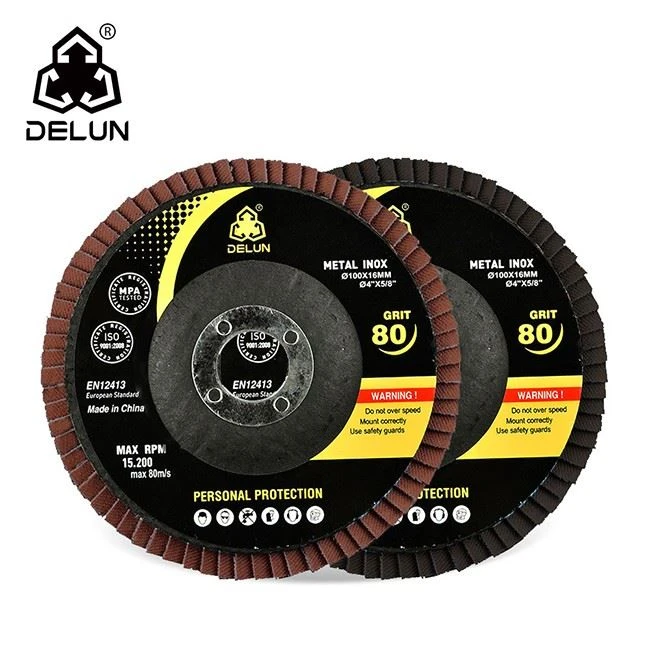

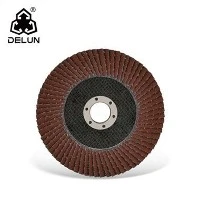
Let's start with the most basic question: what are you working on? Flap discs are designed for specific materials, and mismatching the disc to your material is the number one mistake I see people make. For example, grinding stainless steel requires a different abrasive than grinding mild steel or aluminum. If you grab a general-purpose disc for stainless steel, you'll get loading-where metal clogs the gaps between the flaps-making the disc work harder than it should, burning the material, and shortening its lifespan. That's why DELUN Aluminum Oxide Flap Disc is such a workhorse for stainless steel applications. Aluminum oxide is durable and sharp enough to handle the high heat generated when grinding stainless without breaking down too quickly, and it's formulated to resist loading when paired with stainless grades like 304 or 316. For aluminum, though, aluminum oxide isn't ideal-it's too soft, and aluminum has a low melting point that causes it to gum up the disc. For non-ferrous metals, you want a disc made from zirconia alumina, which is tougher and produces cleaner cuts without clogging. If your project is a mix of mild steel, stainless, and aluminum, you might need two different discs, but for most professional jobs, picking the right abrasive for your primary material is non-negotiable.
Next up, size matters-literally. Flap discs come in a range of diameters, and choosing the right size affects both your control over the job and the compatibility with your angle grinder. The most common sizes are 4.5 inch and 5 inch, but smaller discs (like 115mm, which is roughly 4.5 inches) are popular for tight spaces. Let's break it down: the 115x22 mm Flap Disc is a compact option that fits most standard angle grinders with a 22mm arbor, making it perfect for working in corners, around welds, or on small parts where a larger disc would get in the way. If you're tackling larger surfaces, like smoothing out a steel plate or grinding down a big rusted beam, a bigger disc like the Abrasive Flap Disc 5 Inch covers more ground in less time, reducing the number of passes you have to make. But here's the catch: never use a disc larger than what your angle grinder is rated for. Using a disc with a higher maximum RPM than your tool is built for is a huge safety risk-it can cause the disc to shatter, sending debris flying. Always check your grinder's RPM rating and match it to the disc's speed rating. That's why I always tell customers to confirm their grinder specifications before ordering a disc, no matter how tempted they are to grab the bigger one for speed.
Once you've nailed down material and size, there's another critical factor: disc flexibility. This is where a lot of people get stuck, especially when moving from rough grinding to finishing. Flexible flap discs are designed to contour to irregular surfaces, so they don't leave flat, scratchy marks that you have to work out later. Calcined Abrasive Flexible Flap Disc 4.5 Inch is a great example of this-its flexible flaps bend with the curve of a pipe, a welded joint, or a cast iron part, so you get a smooth finish without having to switch to a separate polishing disc. This saves time and money because you're not buying multiple tools for different steps. Rigid discs, on the other hand, are better for heavy stock removal-like grinding down thick weld beads or removing heavy rust from a structural beam. They don't bend as much, so they cut through material faster, but they're harder to control on curved or delicate surfaces. If your project starts with heavy grinding and ends with polishing, a flexible disc that works for both steps is a huge time-saver. But if you're only doing rough work, a rigid, high-performance disc for stock removal will get the job done quicker.
Grit size is another detail that makes a big difference, and it's often overlooked. Grit refers to the size of the abrasive particles on the flaps-coarser grits (like 36 or 40) are for heavy stock removal, while finer grits (like 80 or 120) are for smoothing and polishing. Let's say you have a rusty steel door: you'd start with a coarse grit (36 or 50) to strip off the thick rust and old paint, then move to a medium grit (80) to smooth the surface, and finish with a fine grit (120 or 180) to prepare it for painting or welding. Using a fine grit first will leave you with a disc that clogs immediately because it's working too hard to remove thick material, and it'll wear out in seconds. Conversely, starting with a coarse grit for a finish job will leave deep scratches that take forever to buff out. The Grinding Flap Disc For Polishing is designed to balance grit and flexibility for finish work, so you don't have to jump from a coarse disc to a separate polishing wheel; it works for both smoothing and adding a clean, polished look to stainless steel appliances or aluminum parts.
There's one more thing that's often a dealbreaker for many users: the disc's backing. Flap disc backings come in two main types: fiberglass and phenolic resin. Fiberglass backings are lightweight and flexible, making them ideal for detail work and finishing, but they're less durable for heavy stock removal. Phenolic resin backings are rigid and heavy-duty, built to handle high-pressure grinding on thick steel or heavy rust. They're less flexible, but they last longer and are more consistent when you're doing repetitive, heavy tasks. If you're a professional fabricator working on structural beams all day, a phenolic-backed disc will be worth the extra cost because it won't warp under pressure and will hold its shape through hundreds of passes. If you're a hobbyist doing occasional small projects, a fiberglass-backed flexible disc will be more than enough.
I've seen customers make mistakes with all of these factors, and the result is always the same: wasted money, extra time, and sometimes even a messy or unsafe project. Last year, a customer came to me frustrated because he'd bought a stack of cheap aluminum oxide discs for grinding aluminum, and they were clogging so badly he was going through three a day. We talked through his mistake, and I recommended zirconia alumina discs made for non-ferrous metals, plus a flexible 4.5-inch disc that would handle his small boat parts. He came back a week later saying it cut his disc usage by 70% and he finished the job in half the time. That's the value of choosing the right disc-it's not just a product, it's a tool that makes your work better, faster, and less stressful.
If you're still not sure which flap disc is right for your project, don't guess. Reach out to me and my team-we've been helping customers match their needs to the right flap discs for years, whether you're a weekend hobbyist or a large-scale industrial contractor. We carry a full range of discs for every job, from compact 115x22 mm discs for tight corners to heavy-duty phenolic-backed discs for high-volume grinding. We don't just sell discs-we help you pick the ones that will actually make your work easier.
References
- Abrasive Technology: Understanding Flap Disc Construction and Application. Abrasive Engineering Journal, 2022, Vol. 68, No. 3, pp. 45-52.
- Metalworking Safety and Best Practices for Angle Grinders. Occupational Safety and Health Administration (OSHA) Technical Report, 2021.
- Material Compatibility of Abrasive Flap Discs for Ferrous and Non-Ferrous Metals. Journal of Manufacturing Processes, 2023, Vol. 90, pp. 112-120.
- Flexible Flap Disc Performance for Surface Finishing Applications. Surface Engineering Journal, 2022, Vol. 38, No. 7, pp. 567-575.