

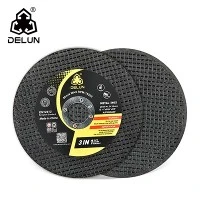
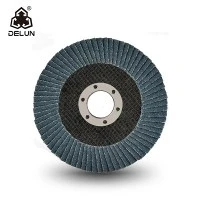



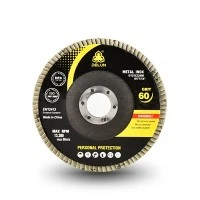
The cutting temperature of an EN12413 cutting disc is a critical factor that significantly impacts the cutting process, the disc's performance, and the quality of the cut. As a supplier of EN12413 cutting discs, understanding this parameter in-depth is essential for providing our customers with the best products and advice.
Understanding EN12413 Cutting Discs
EN12413 is a European standard that specifies the safety requirements for abrasive cutting-off wheels. These cutting discs are commonly used in various industries for cutting different types of metals, including steel, stainless steel, and aluminum. They come in different sizes, such as 125mm, and 4-inch (100mm), and are designed to be used with angle grinders.
The construction of an EN12413 cutting disc typically involves abrasive grains bonded together by a resin. The type of abrasive grains, such as aluminum oxide or silicon carbide, and the bonding strength play a crucial role in determining the disc's cutting ability and its response to heat during the cutting process.
Factors Affecting Cutting Temperature
Several factors contribute to the cutting temperature of an EN12413 cutting disc.
Workpiece Material
The material being cut has a significant influence on the cutting temperature. For example, when cutting stainless steel, the high alloy content in the metal makes it more difficult to cut compared to mild steel. Stainless steel has a lower thermal conductivity, which means that heat generated during the cutting process is less likely to dissipate quickly. As a result, the cutting temperature can rise rapidly. On the other hand, aluminum is a relatively soft metal with high thermal conductivity. When cutting aluminum, heat can be conducted away from the cutting area more effectively, leading to lower cutting temperatures compared to stainless steel.
Cutting Speed
The cutting speed of the angle grinder also affects the temperature. A higher cutting speed generally generates more heat. When the disc rotates at a faster speed, the abrasive grains on the disc come into contact with the workpiece more frequently. This increased interaction results in more friction, which in turn generates more heat. For instance, if an operator sets the angle grinder to a very high speed when cutting a thick steel plate, the cutting temperature can soar, potentially leading to premature wear of the cutting disc and poor cut quality.
Feed Rate
The feed rate, which is the rate at which the cutting disc is pushed into the workpiece, is another important factor. A too-high feed rate can cause excessive friction and heat generation. The abrasive grains on the cutting disc may be subjected to more force than they can handle, leading to their premature breakdown. Conversely, a very low feed rate may also cause problems. The cutting disc may just rub against the workpiece without effectively removing material, which can also lead to heat build-up due to prolonged friction.
Disc Quality and Design
The quality and design of the EN12413 cutting disc itself are crucial. A high-quality disc with well-selected abrasive grains and a strong bonding system can better withstand high temperatures. Some advanced cutting discs are designed with special heat-resistant coatings or ventilation holes to improve heat dissipation. For example, a cutting disc with ventilation holes allows air to flow through, carrying away some of the heat generated during cutting.


Measuring Cutting Temperature
Measuring the cutting temperature of an EN12413 cutting disc is not straightforward. There are several methods that can be used in a laboratory or industrial setting.
Thermocouples
Thermocouples are a common tool for measuring temperature. They can be attached to the cutting disc or the workpiece in close proximity to the cutting area. As the temperature changes, the thermocouple generates a voltage that can be measured and correlated to the temperature. However, attaching thermocouples during the actual cutting process can be challenging, especially considering the high - speed rotation of the cutting disc and the harsh cutting environment.
Infrared Thermometers
Infrared thermometers are non-contact temperature measurement devices. They work by detecting the infrared radiation emitted by an object. An infrared thermometer can be pointed at the cutting area to measure the surface temperature. This method is relatively easy to use and can provide real-time temperature readings. However, it may be affected by factors such as the emissivity of the material and the presence of dust or debris in the cutting area.
Optimal Cutting Temperature Range
Determining the optimal cutting temperature range for an EN12413 cutting disc depends on various factors, including the workpiece material and the disc's specifications.
For general metal cutting, a cutting temperature that is too high can cause several problems. It can lead to the degradation of the resin bond in the cutting disc, causing the abrasive grains to fall off prematurely. This reduces the disc's cutting efficiency and lifespan. High temperatures can also cause the workpiece to undergo thermal deformation, affecting the dimensional accuracy of the cut.
On the other hand, if the cutting temperature is too low, it may indicate that the cutting process is not efficient. The abrasive grains may not be able to effectively penetrate the workpiece, resulting in a slow cutting speed and a rough cut surface.
In most cases, for cutting mild steel with an EN12413 cutting disc, the optimal cutting temperature range is typically between 200 - 400°C (392 - 752°F). When cutting stainless steel, due to its higher hardness and lower thermal conductivity, the optimal temperature range may be slightly higher, around 300 - 500°C (572 - 932°F). For aluminum, the optimal temperature is usually lower, in the range of 100 - 300°C (212 - 572°F).
Impact on Product Selection
As a supplier of EN12413 cutting discs, understanding the cutting temperature is crucial for helping customers select the right product.
For customers who frequently cut stainless steel, we recommend Stainless Steel Cutting Disk with high - quality abrasive grains and a heat - resistant bond. These discs are designed to withstand the higher cutting temperatures associated with stainless - steel cutting.
Those who work with aluminum may benefit from Angle Grinder Wheel for Stainless Steel. These wheels are optimized for the lower cutting temperatures and softer nature of aluminum, ensuring a smooth and efficient cutting process.
For customers who need a 125mm cutting disc, our 125mm Cutting Wheel For Metal Factory offers a wide range of options suitable for different cutting temperatures and applications. The 4-inch cutting disc is also popular, and our 4inch Cutting Wheel Disc For Metal series is designed to handle various cutting tasks with appropriate temperature control.
When cutting stainless steel with a cut-off wheel, our Cutting Stainless Steel with Cut Off Wheel products are engineered to maintain the optimal cutting temperature and provide a high-quality cut.
Conclusion
The cutting temperature of an EN12413 cutting disc is a complex parameter influenced by multiple factors, including the workpiece material, cutting speed, feed rate, and disc quality. By understanding and controlling the cutting temperature, customers can achieve better cutting results, extend the lifespan of the cutting disc, and improve the overall efficiency of their cutting operations.
As a professional supplier of EN12413 cutting discs, we are committed to providing high-quality products that are tailored to different cutting temperature requirements. If you are interested in our products or need advice on selecting the right cutting disc for your specific application, we invite you to contact us for a detailed discussion and procurement negotiation.
References
- ISO standards related to abrasive cutting wheels
- EN12413 European standard for abrasive cutting - off wheels
- Technical literature from abrasive manufacturers