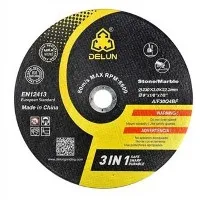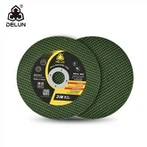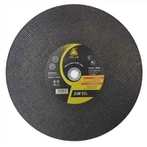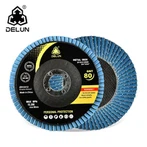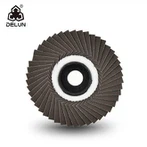




The grinding wheel is the main grinding tool in grinding. The grinding wheel is a porous body, which is made by adding a binder to the abrasive, pressing the blank, drying and baking. Due to the difference in grinding materials, binders and manufacturing processes, the characteristics of grinding wheels are also very different, which has an important impact on grinding quality, productivity and economy.
In order to improve the lubrication of the grinding wheel or prevent the workpiece tree material from sticking to the abrasive grains during the grinding process, auxiliary materials can be mixed in the grinding wheel during the manufacturing process, or filling materials can be added by pressing, dipping and other methods after manufacturing. For example, when grinding stainless steel, cryolite has a melting point of 959°C, which can melt and surround the working surface of the grinding wheel to prevent metal adhesion. Other filling materials such as iron sulfide, polyvinyl chloride, boron and silver can decompose highly chemically active gases under the action of grinding heat. These gases chemically react with the surface of the workpiece to form a thin film to prevent adhesion. In addition, such as graphite and boron silver.
Periodically coating polyvinylidene fluoride or molybdenum disulfide on the surface of the grinding wheel under a certain pressure can form a film with a low coefficient of friction on the contact surface to improve the grinding state. This substance can be regarded as a solid lubricant or another form of grinding wheel filler.