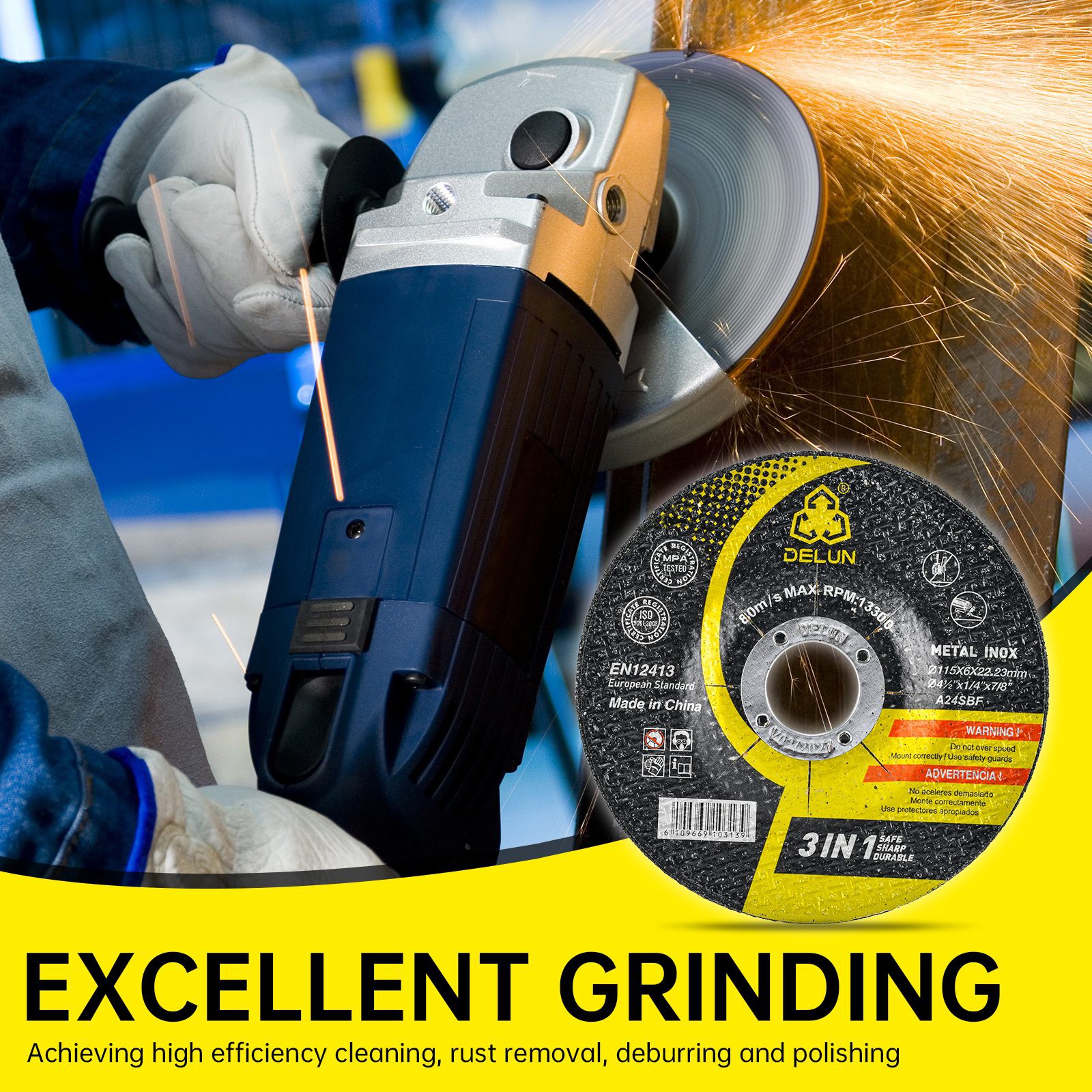
Grinding discs may encounter various issues during use, which not only affect work efficiency and quality but also pose safety risks. Below are common problems and corresponding prevention methods.
1. Disc Rupture/Burst
This is a severe safety hazard. It often occurs due to unqualified disc quality (e.g., internal cracks, uneven structure), over-speed operation (exceeding the maximum speed marked on the disc), or sudden impact with the workpiece. Fragment splashes can easily cause scratches or injuries to operators.
To prevent it: Choose certified, high-quality discs; strictly follow the marked maximum speed; avoid collisions with workpieces and inspect discs for cracks before use.
2. Poor Workpiece Surface Quality
Issues like scratches, unevenness, or inaccurate precision may arise. Reasons include improper grit selection (coarse grit leaves scratches, fine grit reduces efficiency), uneven grinding pressure (excessive local pressure causes over-grinding), or uneven disc wear.
Prevention measures: Select the right grit based on workpiece materials and precision requirements; maintain consistent grinding pressure; replace worn discs promptly.
3. Disc Clogging
When grinding soft materials (e.g., aluminum, copper), chips tend to stick in the gaps of the disc's abrasive grains, making the disc "inactive," reducing grinding efficiency, and causing overheating.
To avoid clogging: Use discs designed for soft materials; regularly clean the disc surface during grinding; apply appropriate cooling lubricants.
4. Excessive Disc Wear
Rapid wear shortens the disc's service life. It is usually caused by mismatched disc materials and workpieces (e.g., using ordinary discs for high-hardness alloys), excessive grinding pressure, or insufficient cooling.
Prevention steps: Match discs to workpiece hardness; control grinding pressure within a reasonable range; ensure adequate cooling to reduce friction heat.
5. Safety Hazards (Dust, Noise, Burns)
Grinding produces a lot of dust, which harms the respiratory system if inhaled for a long time. High-frequency vibration and friction generate loud noise, damaging hearing. Additionally, high temperatures from friction may cause burns if hands touch hot areas accidentally.
Preventive actions: Wear protective gear (dust masks, earmuffs, heat-resistant gloves); work in well-ventilated areas; avoid touching the grinding zone or hot workpieces directly.