Common Problems and Practical Solutions for Cutting Wheels
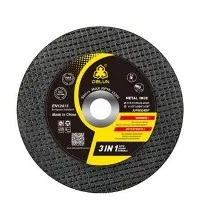
Cutting wheels are core consumable abrasives widely used in metalworking, construction, hardware manufacturing and other industries, suitable for cutting carbon steel, stainless steel, profiles, stone and other materials. In actual operation, users often encounter various failures, which not only reduce production efficiency and increase consumable costs, but also hide potential safety hazards. This article focuses on high-frequency industry problems, deeply analyzes the root causes and sorts out practical solutions to help enterprises standardize operation, reduce costs, improve efficiency and ensure operational safety.
1. Analysis of High-Frequency Failures and Root Causes
1.1 Abnormal Fast Wear and Short Service Life
This is the most common pain point, characterized by rapid edge passivation and thickness reduction in a short time. There are three core causes: firstly, mismatched selection, using ordinary resin cutting wheels for high-hardness alloy steel and stainless steel leads to accelerated loss due to incompatible hardness; secondly, illegal operation, excessive pressure and fast feeding during cutting cause abrasive grains to fall off under overload; thirdly, inconsistent parameters, equipment speed exceeding the rated value of the cutting wheel accelerates abrasive loss due to centrifugal force.
1.2 Cracking, Chipping and Sudden Breakage
Such problems are high-risk safety hazards. Inferior products have defects such as insufficient resin bonding and fewer reinforced mesh layers, making them prone to cracking under stress; oblique cutting, unilateral pressure and impact on workpieces during operation will cause stress concentration and lead to chipping and breakage; long-term storage in humid, high-temperature and exposed environments will embrittle the resin due to aging, greatly reducing the toughness of the cutting wheel.
1.3 Rough Cutting Surface, Burn Marks and Excessive Burrs
Unqualified finished products directly affect subsequent processing. The main reasons are overly coarse particle size of the cutting wheel and poor self-sharpening of abrasives; insufficient cooling and slow feeding during cutting generate high temperatures that burn the workpiece surface to form burn marks; in addition, shaking of the cutting machine spindle and loose installation of the cutting wheel cause cutting vibration, resulting in a large number of burrs.
1.4 High Cutting Resistance and Low Operational Efficiency
Labored cutting and slow progress are mostly caused by un timely replacement of passivated cutting wheels, or soft models leading to premature abrasive grain falling off; it may also be due to insufficient equipment power and low spindle speed, which cannot meet the cutting conditions. Long-term inefficient operation will also aggravate equipment loss.
2. Standardized Solutions: Selection + Operation + Storage
2.1 Precise Selection to Adapt to Working Conditions
Match cutting wheels according to materials: brown fused alumina resin cutting wheels for ordinary carbon steel, white fused alumina/chrome corundum cutting wheels for stainless steel and corrosion-resistant alloys, diamond cutting wheels for stone and concrete. At the same time, strictly select specifications matching the rated parameters according to the power and speed of the cutting machine, and put an end to non-standard mixed use and small-size replacement for large-size ones.
2.2 Standardized Operation to Avoid Safety Risks
Be sure to check the appearance before use, and install only if there are no cracks, chips or deformations; ensure spindle concentricity and proper tightness of fastening nuts; feed at a constant speed during operation, and strictly prohibit excessive pressure, oblique cutting and swinging; use cooling fluid for high-temperature deformable workpieces to reduce burn marks and thermal stress damage.
2.3 Proper Storage to Extend Consumable Life
Cutting wheels should be stored in a dry, ventilated and normal temperature environment, away from water sources, heat sources and corrosive substances to avoid deformation caused by stacking and extrusion. Resin cutting wheels have a warranty period, so inventory management should follow the "first in first out" principle, and regularly check for aged and damaged products.
3. Summary: Detail Control is the Key to Quality Improvement
Most cutting wheel failures are not caused by product quality problems, but by inadequate control of details in selection, operation and storage. Grasping the three links of precise selection in the early stage, standardized operation in the middle stage and proper storage in the later stage can not only effectively reduce problems such as wear, breakage and poor cutting surface, extend service life, but also build a strong safety line, improve processing quality and reduce comprehensive consumable costs.
As a professional abrasive consumable supplier, we have been deeply engaged in the industry for many years, providing global customers with high-quality products and professional technical guidance to solve cutting pain points. Welcome to contact us for customized cutting solutions or selection consultation at any time.