




Hey there! As a wire brush supplier, I often get asked about the difference between a wire brush and a brush roller. Well, let's dive right into it and break down these two handy tools.
First off, let's talk about wire brushes. These are super versatile tools that come in a whole bunch of shapes and sizes. They're mainly made up of wires (usually steel, brass, or stainless - steel) attached to a handle or a base. You can find them in various forms like flat brushes, cup brushes, and handheld detail brushes.
One of the biggest advantages of wire brushes is their precision. For example, if you're working on a small, intricate piece of metalwork and you need to remove rust or scale from a tight corner, a wire brush is your go - to. It gives you that fine - tuned control. Say you've got an old metal hinge that's all rusty, a small handheld wire brush allows you to carefully clean each nook and cranny without damaging the delicate parts of the hinge.
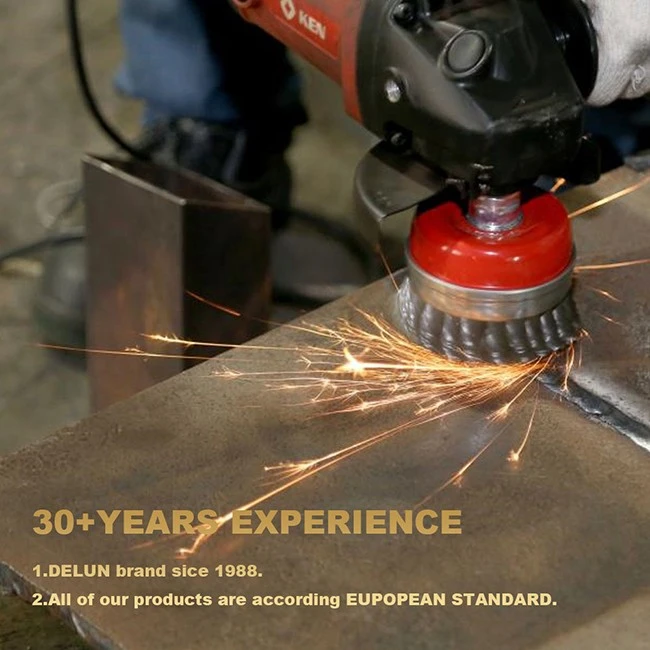
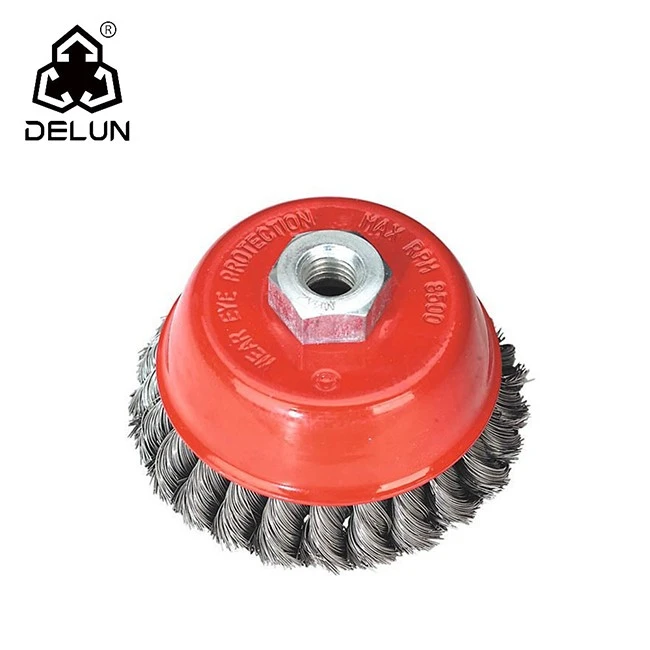
Wire brushes are also great for surface preparation before painting or coating. If you're repainting an old iron gate, using a wire brush to remove loose paint and oxidation will ensure that the new paint adheres properly. There are different types of wire brushes for different tasks. For a more heavy - duty job like cleaning an industrial metal surface, a Knotted Cup Brush 2.5inch DELUN might be your best bet. It has a strong, knotted design that can really dig into stubborn dirt and rust.
Now, let's move on to brush rollers. Brush rollers are typically cylindrical in shape and are often used in industrial settings. They're like a bundle of wires or bristles wrapped around a central core, which can be mounted on a machine.
The key advantage of brush rollers is their efficiency. They cover a large surface area in a short period of time. For instance, if you're working in a factory and need to clean the surface of a wide metal sheet, a brush roller attached to a conveyor belt system can breeze through the job. The continuous rotation of the roller and the multiple bristles or wires ensure that the entire surface gets cleaned evenly.
Brush rollers are also excellent for tasks that require a more uniform finish. In a woodworking shop, a brush roller can be used to smooth the surface of wooden panels. As the roller moves across the wood, it gently removes any rough fibers, leaving behind a consistent and polished look.
When it comes to the abrasive capabilities, there's also a difference. Wire brushes tend to be more aggressive in removing tough materials like heavy rust and thick layers of paint. But this can also mean that they have a higher risk of scratching the surface if not used carefully. On the other hand, brush rollers are usually more gentle. They can still remove dirt and contaminants, but because of their larger contact area and smoother movement, they cause less surface damage.
Another factor to consider is maintenance. Wire brushes are generally easier to clean and maintain. You can simply tap them against a hard surface to remove debris, or wash them with a solvent if needed. Brush rollers, especially those in large industrial machines, can be a bit more complicated to clean and replace. But if you keep up with regular maintenance, they'll serve you well for a long time.
In terms of cost, wire brushes are often more budget - friendly for small - scale projects. You can pick up a basic handheld wire brush for a few dollars. Brush rollers, especially those designed for specific industrial applications, can be more expensive upfront. However, when considering the long - term cost and the amount of work they can handle, they can be a great investment for large - scale operations.
Now, let's take a look at some specific types of products. If you're looking for a high - quality wire brush for various tasks, the HOT SELLING DELUN BRAND CUP BRUSH 3inch Wire Brush is a great choice. Its 3 - inch size makes it suitable for medium - sized jobs, whether it's cleaning metal pipes or prepping a car body for painting.
And if you need a less - abrasive option, the Abrasive Nylon Wheel Brush is worth considering. Made of nylon, it's gentle on surfaces but still effective at removing light dirt and debris. It's perfect for tasks where you don't want to scratch the material, like cleaning plastic or fiberglass parts.
In summary, the main differences between wire brushes and brush rollers come down to precision versus efficiency, surface area coverage, aggressiveness, maintenance, and cost. Depending on your needs, you can choose the right tool for the job.
If you're in the market for wire brushes or any related products, we're here to help. Whether you're a hobbyist working on a weekend project or a large - scale industrial manufacturer, we've got the products and the expertise to meet your needs. Contact us to start discussing your procurement requirements, and let's find the perfect wire brushes for your jobs!
References:
- General knowledge of wire brush and brush roller applications from industry experience.
- Product specifications and usage guidelines from our in - house product manuals.