




Abrasive grinding is a crucial process in various industries, from manufacturing to metalworking. It involves using abrasive materials to remove material from a workpiece, shaping it to the desired form and finish. One of the key factors that significantly influence the abrasive grinding process is the hardness of the workpiece. As an abrasive grinding supplier, understanding how the hardness of the workpiece affects abrasive grinding is essential for providing the best products and solutions to our customers.
Understanding Workpiece Hardness
Hardness is a measure of a material's resistance to deformation, indentation, or scratching. In the context of abrasive grinding, the hardness of the workpiece determines how easily the abrasive material can remove material from its surface. Different materials have different hardness levels, which are typically measured using scales such as the Rockwell, Brinell, or Vickers hardness scales.
Materials can be broadly classified into three categories based on their hardness: soft, medium, and hard. Soft materials, such as aluminum and copper, have relatively low hardness values and are easier to grind. Medium-hard materials, like mild steel, offer moderate resistance to grinding. Hard materials, such as high-speed steel and carbide, have high hardness values and require more aggressive grinding techniques.


Effects of Workpiece Hardness on Abrasive Grinding
1. Grinding Force and Power Consumption
The hardness of the workpiece directly affects the grinding force required to remove material. Harder workpieces require higher grinding forces to break down the material and remove it from the surface. This increased force leads to higher power consumption during the grinding process. As an abrasive grinding supplier, we need to recommend abrasive products that can withstand the high forces and provide efficient grinding performance.
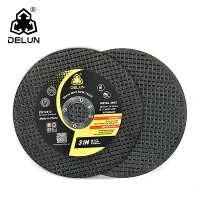
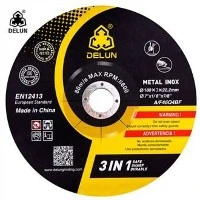
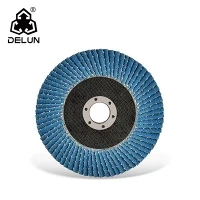
For example, when grinding a hard workpiece like carbide, a high-strength abrasive wheel with a suitable grit size and bond type is required. Our Grinding Disc Metal Grindtting INOX Grindting At 5 Inch Super Durability is designed to handle the high forces and provide long-lasting performance when grinding hard materials.
2. Abrasive Wear
The hardness of the workpiece also affects the wear rate of the abrasive material. Harder workpieces cause more rapid wear of the abrasive grains, as they require more energy to break down the material. This can lead to a shorter lifespan of the abrasive wheel or disc. To counteract this, we need to select abrasives with high wear resistance and appropriate grit sizes.
Our 100mm Best Grinding Disc For Metal INOX Processing is made from high-quality abrasive materials that offer excellent wear resistance, making it suitable for grinding both soft and hard workpieces.
3. Surface Finish
The hardness of the workpiece can have a significant impact on the surface finish of the ground part. Softer workpieces tend to produce a smoother surface finish, as the abrasive grains can more easily remove material without causing excessive damage to the surface. Harder workpieces, on the other hand, may require more precise grinding techniques to achieve a smooth surface finish.
When grinding hard workpieces, it is important to use a fine-grit abrasive and a slow grinding speed to minimize surface roughness. Our DELUN 9 INCH GRINDING DISC WITH EFFICIENT PERFORMANCE is designed to provide a high-quality surface finish, even when grinding hard materials.
4. Grinding Wheel Selection
The hardness of the workpiece is a critical factor in selecting the appropriate grinding wheel or disc. For soft workpieces, a softer abrasive wheel with a coarser grit size is typically used, as it can remove material quickly and efficiently. For hard workpieces, a harder abrasive wheel with a finer grit size is required to ensure precise grinding and a good surface finish.
As an abrasive grinding supplier, we offer a wide range of grinding wheels and discs to suit different workpiece hardness levels. Our experts can help customers select the right product based on their specific grinding requirements.
Strategies for Grinding Different Hardness Workpieces
1. Grinding Soft Workpieces
When grinding soft workpieces, such as aluminum or copper, it is important to use a soft abrasive wheel with a coarse grit size. This allows for fast material removal and reduces the risk of clogging the abrasive wheel. A low grinding pressure should be applied to prevent excessive deformation of the workpiece.
2. Grinding Medium-Hard Workpieces
For medium-hard workpieces, like mild steel, a medium-hard abrasive wheel with a medium grit size is recommended. This provides a good balance between material removal rate and surface finish. A moderate grinding pressure can be applied to achieve efficient grinding.
3. Grinding Hard Workpieces
Grinding hard workpieces, such as high-speed steel or carbide, requires a hard abrasive wheel with a fine grit size. A high grinding pressure may be necessary to break down the hard material, but care should be taken to avoid overheating the workpiece. Coolant can be used to reduce heat and improve the grinding performance.
Conclusion
The hardness of the workpiece has a profound impact on the abrasive grinding process. As an abrasive grinding supplier, we understand the importance of selecting the right abrasive products for different workpiece hardness levels. By considering the effects of workpiece hardness on grinding force, abrasive wear, surface finish, and grinding wheel selection, we can provide our customers with the best solutions for their grinding needs.
If you are looking for high-quality abrasive grinding products, we invite you to contact us for a consultation. Our team of experts can help you select the right products and provide you with the support you need to achieve optimal grinding results.
References
- Kalpakjian, S., & Schmid, S. R. (2014). Manufacturing Engineering and Technology. Pearson.
- Trent, E. M., & Wright, P. K. (2000). Metal Cutting. Butterworth-Heinemann.
- Stephenson, D. A., & Agapiou, J. S. (2006). Metal Cutting Theory and Practice. CRC Press.