



Hey there, fellow grinding enthusiasts! As a supplier in the abrasive grinding game, I've seen my fair share of rough surfaces and smooth finishes. Today, I'm gonna dive into how we measure surface roughness in abrasive grinding. It's a crucial aspect that can make or break your grinding projects, so let's get right into it.
Why Measuring Surface Roughness Matters
First off, you might be wondering why we even bother measuring surface roughness. Well, it's all about quality control. In industries like automotive, aerospace, and manufacturing, the surface roughness of a part can affect its performance, durability, and even its appearance. For instance, if you're grinding a metal part for a high - speed engine, a rough surface can cause increased friction, which leads to more wear and tear over time. On the other hand, if you're working on a decorative piece, a smooth surface is often more aesthetically pleasing.
Common Methods of Measuring Surface Roughness
Profilometry
One of the most common methods is profilometry. This technique involves using a stylus that runs across the surface of the workpiece. As the stylus moves, it detects the peaks and valleys on the surface and records the height variations. The data collected is then used to calculate various roughness parameters, such as Ra (arithmetical mean deviation of the roughness profile).
Profilometry is great because it's relatively simple and can provide accurate measurements. However, it does have some limitations. For example, it's a contact method, which means the stylus can potentially damage the surface, especially if it's a soft or delicate material.
Optical Methods
Optical methods are another popular way to measure surface roughness. These methods use light to analyze the surface. One common optical technique is confocal microscopy. It works by focusing a laser beam on the surface and measuring the reflected light. By analyzing the intensity and phase of the reflected light, we can get a detailed map of the surface topography.

Optical methods are non - contact, which is a big advantage. They can be used on a wide range of materials, including soft and fragile ones, without causing any damage. However, they can be more expensive and require more complex equipment compared to profilometry.
Factors Affecting Surface Roughness in Abrasive Grinding
Abrasive Grit Size
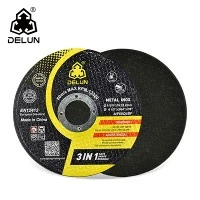
The size of the abrasive grit on the grinding wheel plays a huge role in determining the surface roughness. Generally, a coarser grit will result in a rougher surface, while a finer grit will produce a smoother finish. For example, if you're using a 4.5 Inch Grinding Disc Metal Grinding Metal Processing Durable with a coarse grit, you can quickly remove a large amount of material, but the surface will be relatively rough. On the other hand, a finer - grit disc will take longer to remove material but will leave a smoother surface.
Grinding Parameters
Grinding parameters such as grinding speed, feed rate, and depth of cut also have a significant impact on surface roughness. A higher grinding speed can sometimes lead to a smoother surface, but if it's too high, it can cause overheating and damage the surface. Similarly, a lower feed rate and a smaller depth of cut usually result in a smoother finish, but they also increase the grinding time.
Our Product Range and Surface Roughness
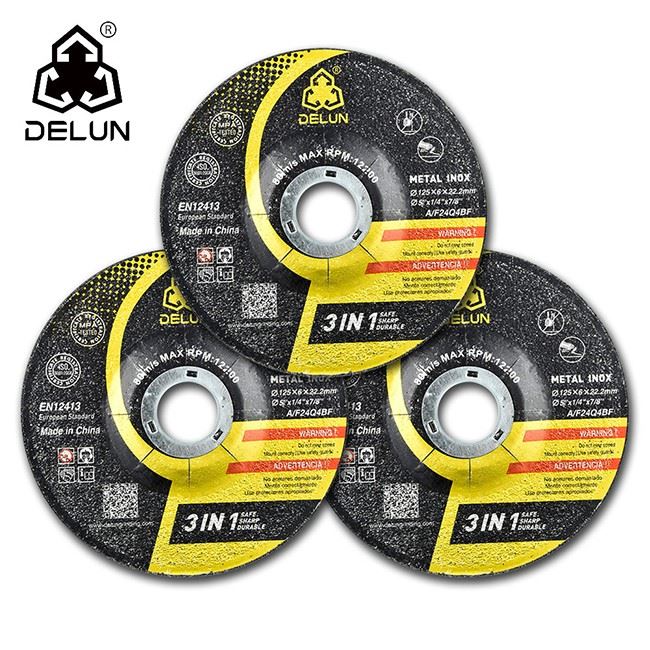
At our company, we offer a wide range of abrasive grinding products designed to help you achieve the desired surface roughness. Take our Grinding Disc Metal Grindtting INOX Grindting At 5 Inch Super Durability. This disc is made with high - quality abrasives that can provide a consistent and smooth finish on metal and INOX materials.
Our 100mm Best Grinding Disc For Metal INOX Processing is another great option. It's engineered to offer precise control over the grinding process, allowing you to achieve the exact surface roughness you need for your project.
And for those big - scale grinding jobs, our DELUN 9 INCH GRINDING DISC WITH EFFICIENT PERFORMANCE is a real workhorse. It can handle heavy material removal while still maintaining a good level of surface finish.
Tips for Controlling Surface Roughness
If you want to control the surface roughness in your abrasive grinding projects, here are a few tips:
- Select the Right Abrasive: Choose the abrasive grit size based on the desired surface finish. If you need a smooth surface, start with a coarser grit for rough grinding and then switch to a finer grit for finishing.
- Optimize Grinding Parameters: Experiment with different grinding speeds, feed rates, and depths of cut to find the combination that gives you the best surface roughness. Keep in mind that these parameters may vary depending on the material you're grinding.
- Maintain Your Grinding Equipment: Regularly check and maintain your grinding wheels and machines. A worn - out wheel can cause inconsistent surface roughness, so replace it when necessary.
Conclusion
Measuring and controlling surface roughness in abrasive grinding is essential for achieving high - quality results. Whether you're a professional in the manufacturing industry or a DIY enthusiast, understanding the methods of measuring surface roughness and the factors that affect it can help you take your grinding projects to the next level.
If you're interested in our abrasive grinding products and want to discuss your specific needs, feel free to reach out to us. We're here to help you find the best solutions for your grinding applications.
References
- Smith, J. (2020). Abrasive Grinding Handbook. Industrial Press.
- Jones, R. (2018). Surface Roughness Measurement Techniques. Springer.