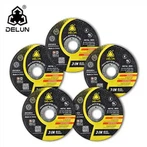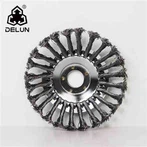




Brazil is a country with vast natural resources, including the availability of high-quality raw materials for the production of abrasive products such as grinding wheels. The Brazilian grinding wheel market has been growing at a steady pace over the last few years due to the increasing demand from various industries such as aerospace, automotive, construction, and metalworking. In this article, we will analyze the Brazilian grinding wheel market, its current trends and challenges, and its future prospects.
Market Size and Segmentation
The Brazilian grinding wheel market is highly fragmented and competitive, with several local and international players operating in the market. According to a recent study, the Brazilian abrasive market was valued at approximately USD 400 million in 2020, with grinding wheels accounting for a significant proportion of the market share.
The market is segmented into various types of grinding wheels, including vitrified, resinoid, and diamond. Vitrified grinding wheels are the most commonly used type in Brazil, as they offer high grinding efficiency and longer life compared to other types. Resinoid grinding wheels are also widely used in the market due to their versatility and ability to grind a variety of materials.
Key Players
The Brazilian grinding wheel market is dominated by several local players, including Norton Saint-Gobain, 3M, Tyrolit, and Abrasivos São Jorge. These companies have a significant presence in the market and offer a wide range of abrasive products to cater to the needs of various industries.
Market Drivers and Trends
The Brazilian grinding wheel market is driven by several factors, including the increasing demand from various end-use industries, the growth of the economy, and the expansion of the manufacturing sector. The automotive and aerospace industries are the major consumers of grinding wheels in Brazil, and the growth of these industries is expected to boost the demand for grinding wheels in the coming years.
Another trend in the market is the increasing use of advanced abrasives such as diamond grinding wheels, which offer superior performance and durability compared to traditional abrasive products. The diamond grinding wheel segment is expected to witness significant growth in the coming years due to its increasing demand from various industries such as electronics, aerospace, and automotive.
Challenges and Opportunities
The Brazilian grinding wheel market is faced with several challenges, including the high cost of raw materials, fluctuating raw material prices, and the volatility of foreign exchange rates. These factors affect the profit margins of local manufacturers and could hinder the growth of the market in the long run.
However, there are several opportunities in the market that can be leveraged by local manufacturers and international players. One such opportunity is the increasing demand for grinding wheels in the construction industry due to the growth of the infrastructure sector in Brazil. The construction industry is expected to witness significant growth in the coming years, and the demand for grinding wheels for applications such as surface preparation, cutting, and polishing is expected to increase.
Conclusion
In conclusion, the Brazilian grinding wheel market is a growing and lucrative market with significant potential for growth in the coming years. The market is driven by various factors such as the increasing demand from end-use industries, the growth of the economy, and the expansion of the manufacturing sector. Local manufacturers and international players can leverage the opportunities in the market to expand their business and increase their market share. With the right strategy and investment, the Brazilian grinding wheel market can be a profitable market for both local and foreign investors.