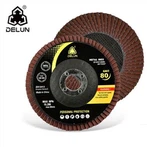
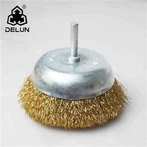
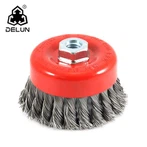
Wire brushes are indispensable abrasive tools used in industrial, construction, and maintenance applications for cleaning, deburring, rust removal, and surface preparation. Composed of metal wires attached to a backing or hub, wire brushes are designed to remove contaminants, smooth rough surfaces, and prepare materials for painting, welding, or coating. Available in a variety of configurations, materials, and sizes, wire brushes are suitable for processing metal, wood, concrete, and other materials.
The core structure of a wire brush consists of wire filaments and a base (backing plate, hub, or handle). The wire filaments are the functional component, and their material, thickness, and arrangement directly impact the brush's performance. Common wire materials include carbon steel (for general-purpose cleaning and deburring of ferrous metals), stainless steel (for cleaning stainless steel, aluminum, and other non-ferrous metals, as it resists corrosion and avoids contamination), and brass (for gentle cleaning of soft metals, wood, and delicate surfaces, as it is non-abrasive and does not scratch). The wire thickness (gauge) varies from fine (for light cleaning and polishing) to heavy (for aggressive rust removal and deburring). The arrangement of wires includes straight (for uniform cleaning) and crimped (for increased flexibility and surface contact, ideal for contour cleaning).
Wire brushes are classified based on their shape, mounting type, and application. Common shapes include cup brushes (used for cleaning flat surfaces, welds, and edges, mounted on angle grinders), wheel brushes (for cleaning cylindrical surfaces, shafts, and pipes, used with bench grinders or stationary machines), end brushes (for cleaning holes, slots, and intricate surfaces, mounted on die grinders), and hand-held brushes (with handles for manual cleaning of small areas or delicate components). Other specialized types include wire scratch brushes (for removing paint and varnish), wire cup brushes with twisted filaments (for aggressive rust and scale removal), and stainless steel wire brushes for food industry applications (compliant with hygiene standards).
The applications of wire brushes are diverse and span across multiple industries. In metalworking, wire brushes are used for removing rust, scale, and oxide layers from steel surfaces before welding or painting, ensuring strong adhesion of coatings and welds. They are also used for deburring metal components, removing burrs and sharp edges left by machining processes. In the automotive industry, wire brushes are employed for cleaning engine parts, exhaust systems, and brake components, removing carbon deposits and rust. In construction, they are used for preparing concrete surfaces before painting or sealing, removing dirt, grease, and loose particles. In the marine industry, stainless steel wire brushes are used for cleaning boat hulls and marine components, resisting saltwater corrosion. In woodworking, brass wire brushes are used for distressing wood, creating a vintage or rustic finish.
Selecting the right wire brush is essential for achieving optimal results and avoiding damage to the workpiece. When choosing a wire brush, consider the following factors: the material of the workpiece (ferrous vs. non-ferrous metals, wood, concrete), the type of contamination to be removed (rust, scale, paint, burrs), and the tool being used (angle grinder, die grinder, hand-held). For ferrous metals, carbon steel wire brushes are cost-effective and efficient. For non-ferrous metals such as stainless steel and aluminum, stainless steel wire brushes are recommended to prevent corrosion and contamination. For soft materials or delicate surfaces, brass or nylon wire brushes (non-metallic) are ideal. Additionally, select the appropriate brush shape and size based on the surface area and accessibility of the workpiece (e.g., end brushes for small holes, cup brushes for large flat surfaces).
Safety is a critical consideration when using wire brushes, as loose wire filaments or improper operation can cause injury. Before use, inspect the brush for loose or broken wires, cracks in the base, and ensure that the mounting is secure. Wear appropriate PPE, including safety goggles (to protect against flying wire filaments and debris), face shields, gloves, and long-sleeved clothing. Avoid applying excessive pressure during operation, as this can cause the wires to bend or break and reduce the brush's service life. Keep the brush moving at a consistent speed and angle to avoid uneven wear and damage to the workpiece. Never use a wire brush on rotating machinery without proper guards, and avoid contact with hard surfaces that can damage the wires.
In summary, wire brushes are versatile tools that play a crucial role in cleaning, deburring, and surface preparation across various industries. By understanding their structure, classification, and application requirements, and following proper selection and safety guidelines, users can achieve effective cleaning results, improve the quality of subsequent processes (such as welding and painting), and ensure operational safety. When purchasing wire brushes, choose products from reputable manufacturers that comply with international standards to guarantee product durability and performance.