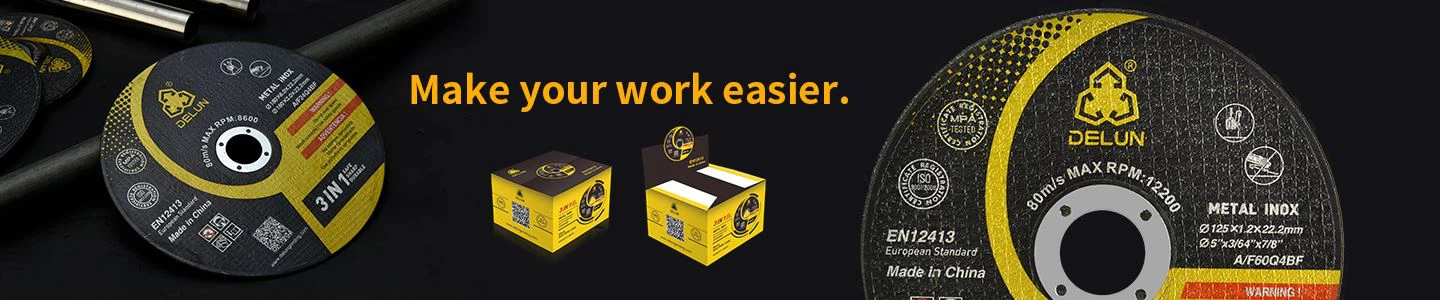
Choosing the right DELUN cutting disc thickness is critical when it comes to achieving optimal results. Cutting discs are widely used in industries such as metalworking, construction, DIY, and more. These disks come in various thicknesses and sizes that are designed to meet different task requirements. The thickness of a cutting disc is essential as it affects the cutting speed, disc lifespan, and the type of materials it can cut.
Before selecting the right cutting disc thickness, you should consider some factors. One important factor to consider is the material you intend to cut. Soft materials such as plastics and woods require thinner cutting discs to prevent chipping and cracking. Additionally, thinner cutting discs produce lesser friction and heat, making them ideal for cutting soft materials.
On the other hand, harder materials such as metal sheets require thicker cutting discs as they are more abrasive. Thicker cutting discs have a stronger cutting force that can handle the heat generated during the cutting process, and reduce heat build-up. Therefore, thicker cutting discs are preferred for cutting harder materials to minimize the possibility of wear, chipping, and cracking.
Another factor to consider is the cutting speed required for the project. For projects that require faster cutting speeds, thinner cutting discs are preferred. Thinner cutting discs will produce less surface area and less resistance against the workpiece, allowing for faster rotations. However, it is important to note that using a thin cutting disc that is too thin can reduce its lifespan significantly as it could become easily damaged or worn out.
The lifespan of the cutting disc is also critical as it can affect your overall cost. Thicker cutting discs produce more heat, which can cause them to wear out easily. Therefore, thicker cutting discs require frequent replacement, raising the cost of the overall project. When using cutting discs, it is essential to balance the thickness and lifespan of the cutting disc.
Conclusion
In conclusion, choosing the right cutting disc thickness requires an understanding of the project, material, and cutting speed required. Thinner cutting discs are preferred for softer materials and faster cutting speeds. While thicker cutting discs are preferred for harder materials to minimize heat build-up and wear. Additionally, the lifespan of the cutting disc should be balanced with the thickness to optimize cutting results and reduce overall project costs. Having this knowledge will enable you to choose the appropriate cutting disc thickness, leading to efficient project completion and higher productivity.