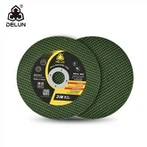
The use of special stainless steel cutting blades is mainly due to its stable performance, but its use performance will be due to its own influence. So, what are the factors that can affect its performance?
1. The influence of molybdenum: molybdenum and chromium are both elements that form and stabilize ferrite and expand the ferrite phase region. Molybdenum has the same ability to form ferrite as chromium. Molybdenum also promotes the precipitation of intermetallic phases in austenitic stainless steels, such as σ phase, κ phase, and Laves equivalent, which will adversely affect the corrosion resistance and mechanical properties of the steel, especially resulting in a decrease in plasticity and toughness.
2. The influence of chromium: Chromium is the most important alloying element in austenitic stainless steel. The rust resistance and corrosion resistance of austenitic stainless steel are mainly due to the fact that chromium promotes the passivation of steel and The result of keeping the steel stable and passive. Chromium has the greatest influence on the performance of austenitic stainless steel in corrosion resistance, which is mainly manifested as: chromium improves the performance of steel's oxidation resistance medium and acid chloride medium; under the combined action of nickel, molybdenum and copper, chromium improves steel resistance. The performance of reducing media, organic acids, urea and alkali media; chromium also improves the resistance of steel to local corrosion, such as intergranular corrosion.
3. The influence of nickel: Nickel is an element that strongly stabilizes austenite and expands the austenite phase region. As the nickel content increases, the residual ferrite can be completely eliminated, and the tendency to form the σ phase is significantly reduced; The temperature of transforming from tensite to hydrocarbon is lowered, and the λ→M phase transformation may not even occur. However, the increase of nickel content will reduce the solubility of carbon in austenitic stainless steel, thereby increasing the tendency of carbide precipitation. And the addition of nickel can further improve its toughness. Nickel can also significantly reduce the cold work hardening tendency of austenitic stainless steels, which is mainly due to the increased stability of austenite, which reduces or even eliminates the martensite transformation during cold working.