


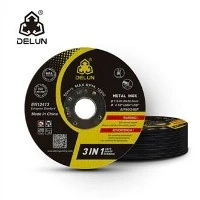
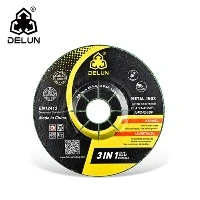
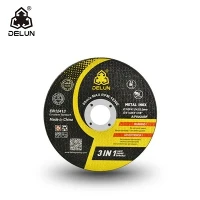

Hey there! If you've ever stared at a pile of grinding discs and thought, "What are these things even made of?", same here. I've been selling grinding discs for a few years now-you'd be shocked how many new contractors, DIYers, even some old heads hit me up asking this exact question. Most people just grab the cheapest disc at the hardware store and get to work, but trust me, knowing what your disc is made of makes a huge difference in how well it cuts, how long it lasts, and if you don't end up ruining your workpiece. Today, I'm breaking down the main materials that make up grinding discs, and throwing in some actual stuff we sell because, well, that's what I know.
First off, let's keep this simple. Grinding discs aren't just a random chunk of grit stuck to a piece of plastic. There's three main parts to every decent disc: the abrasive grit (the sharp, hard part that does the actual grinding), the bonding agent (the glue that holds the grit together), and the backing (the base that keeps the whole thing rigid enough to hold up to pressure). Every material choice here is tailored for a specific job, so let's dive into each part, starting with the grit-this is the star of the show.
Grit is the sharpest, hardest component, and it's what bites into metal, stone, wood, whatever you're grinding. There's a bunch of different grit types, each with their own strengths. Let's go through the most common ones.
First up: Aluminum Oxide. This is the workhorse grit. It's tough, affordable, and perfect for grinding metal like steel, iron, or even some alloys. It doesn't wear down super fast, and it breaks down a little as you use it, so new sharp edges keep showing up-no dull disc halfway through your project. Most general-purpose grinding discs use aluminum oxide, which is why it's the one you'll find in every hardware aisle. It's great for heavy stock removal, like stripping paint or rust off a old fence, or shaping steel parts for a project.
Next, Silicon Carbide. This is way harder than aluminum oxide, so it cuts smoother, harder materials. It's mostly used for non-metallic stuff: stone, concrete, ceramic, even glass, and it's also the go-to for wet grinding because it's less likely to overheat. If you've ever done wet polishing on a countertop or smoothed down a concrete edge, you've probably used silicon carbide grit. We sell a bunch of products with this-check out the Waterproof Silicon Carbide Sandpaper for Wet/Dry Polishing if you're into wet grinding and polishing projects. These are super versatile, work for both wet and dry, and the silicon carbide grit makes them perfect for that polished finish you want on stone or glass.
Then there's Zirconia Alumina. If aluminum oxide is the workhorse, zirconia alumina is the heavy-duty version. It's even tougher than aluminum oxide, stays sharp longer, and is way more resistant to heat. That makes it ideal for high-speed grinding or working on really thick, dense metal, like welding beads or heavy steel structures. It doesn't break down as easily, so it lasts way longer than regular aluminum oxide for tough jobs. I tell guys doing construction or metal fabrication to grab discs with zirconia alumina if they're grinding all day long-it saves them money in the long run because they don't have to change discs every 10 minutes.
Now, let's talk about the bonding agent. This is what holds all that grit in place. Without a good bond, the grit would just fly off the disc in chunks, and it would be useless. There's two main types of bonds here: resin bond and fiber resin bond. Resin bond is the most common-made from a mix of plastic and other chemicals that's super strong and durable. It works for high-speed grinders, which is what most people use with angle grinders. The bond is flexible enough that it can handle the pressure of grinding, but rigid enough to hold the grit tight.
Fiber resin bond is a little different-it's even more flexible and has a fabric (fiber) layer mixed in with the resin. That makes the disc more resistant to breaking if you hit a hard spot, and it's great for grinding curved surfaces or contour work. If you're doing a project that needs a little give, not just flat grinding, fiber resin discs are the way to go. We have a great Fiber Resin Grinding Disc that's perfect for that kind of work-they hold up well to both wet and dry use, and the fiber reinforcement means you don't have to worry about the disc snapping mid-job.
Then there's the backing, the base layer of the disc. This is what attaches to your angle grinder or other power tool, so it needs to be sturdy but sometimes a little flexible. Backings come in a few materials: cloth, paper, fiberglass, even rubber for some polishing pads. Paper backing is the cheapest, most common for light-duty work like sanding, but it's not as tough for heavy grinding. Cloth backing is way more durable-thicker, stronger, can handle a lot of pressure. It's used for heavy metal grinding because it won't tear or bend when you're pushing hard. Fiberglass backing is super rigid, great for metal cutting discs where you need a straight, flat edge. We also sell DELUN 4 Inch metal and inox Grinding Disc which has a fiberglass backing-perfect for grinding stainless steel and metal, it's rigid enough to make clean, precise cuts without bending or warping.
Wait, there's also a special type of grinding disc for polishing, right? A lot of people mix up grinding and polishing-grinding is about removing material, polishing is about making it smooth. Polishing discs have different materials, usually a foam or fiber backing with a softer abrasive, sometimes even a pad that works with polishing compounds. We carry a range of polishing tools, like Polishing Pad Burnishing Tools that work great for metal and stone polishing. These pads are softer than regular grinding discs, so they don't remove much material, just buff it to a shine. For floor polishing, we also have Fiber Sponge Floor Polishing Pad-super flexible, works on concrete, tile, or hardwood floors, gives a really smooth finish after you're done grinding the rough spots.
Let me give you a quick real-world example to make this all make sense. Last month, a guy came in asking for a disc to grind down a rusty steel gate and polish the edges so it looked good. I pointed him to the DELUN 4 Inch metal and inox Grinding Disc (for the heavy rust removal) and then the Polishing Pad Burnishing Tools (for polishing the edges). He came back a week later saying it worked way better than the cheap ones he was buying at the big box store. Why? The metal disc had a zirconia alumina grit and fiber resin bond, so it ground through the rust fast without wearing out, and the polishing pad was soft enough to get the edges smooth without scratching the steel.


Another example: my neighbor was working on a concrete countertop for his kitchen. He was doing wet grinding, so I told him to get the Waterproof Silicon Carbide Sandpaper for Wet/Dry Polishing. The silicon carbide grit cut through the concrete easily, and since it's waterproof, it didn't overheat like regular dry discs do when he sprayed water on the concrete to keep dust down. That's a big thing-using the wrong disc material for wet or dry use can cause the grit to glaze over (when the sharp edges get dull and smooth, so it doesn't cut) or even the disc to break apart.
Now, here's the thing: there's no one "best" grinding disc-it all depends on what you're working on. Metal? Go for aluminum oxide or zirconia alumina grit, resin or fiber resin bond. Stone or concrete? Silicon carbide grit, wet/dry resistant backing. Polishing? Softer pads with finer grit. If you're not sure, don't be afraid to ask-we get this question all the time, and we help guys pick the right disc for their project.
A lot of people skip this part and just grab whatever's cheapest, but that's a mistake. A good disc isn't just a consumable-it saves you time, saves you money, and gives you a better end result. If you're tired of changing discs every 10 minutes, or ending up with a uneven grind, or scratching your workpiece because you used the wrong material, take a minute to check what your disc is made of next time you buy.
If you're working on a project right now and need the right grinding disc or polishing pad, we've got a wide range for metal, stone, concrete, and more. Whether you need a heavy-duty disc for construction, a wet/dry disc for polishing, or a soft pad for floor work, we've got you covered. Hit us up to chat about your project-we're here to help you pick the right materials so your job goes smooth.
References:
- Machining Design. "Abrasives 101: Understanding Grinding Wheel and Disc Materials."
- Fabricator Magazine. "Choosing the Right Grinding Disc for Metal Fabrication."
- Concrete Construction. "Selecting Abrasives for Wet Grinding and Polishing Concrete Surfaces."
- Finishing Trades Magazine. "Bonding Agents and Backing Materials for Grinding Discs."